

As we look back at the critical search and performance advertising developments between June 10th and June 23rd, 2026, a singular macro-trend dominates the conversation: the automation paradox. Platforms are building increasingly robust, hands-off machine learning systems while simultaneously introducing granular toggles, safety barriers, and transparency features to keep strategic control in human hands.
For modern performance marketers, the mandate is clear: we must master the tools of automation without surrendering the steering wheel.
1. Google Ads Bidding & Automation: The Rebranding of Control
Perhaps the most symbolic update of the fortnight is the official return of familiar, explicit branding. Google Ads has brought back the Target CPA and Target ROAS naming convention to its bidding workflows. For years, these strategies were nested beneath “Maximize Conversions” and “Maximize Conversion Value.” This interface shift marks a return to clarity, allowing media buyers to align bid strategies directly with corporate financial KPIs without wading through platform euphemisms.
Managing Budgets and Safety Nets
Automation is also adjusting how it behaves in budget-constrained scenarios. The latest update to target-based bidding for budget-limited campaigns changes how the system adjusts targets to maximize efficiency when daily caps are reached. Additionally, to ease transitions toward fully AI-driven structures, Google announced that the Dynamic Search Ads (DSA) automigration has been delayed to February 2027, giving brands breathing room and offering fresh AI Max reporting guidance and DSA transition plans to ensure smoother operational migration.
Auto-Enrollment & First-Party Signals
Data quality remains the lifeblood of successful automation. Google is taking a more aggressive posture on first-party data collection by automatically enrolling advertisers in conversion-based customer lists and introducing automated classification features to automatically classify conversion-based customer lists. This is complemented by the launch of a beta for supplemental conversion data, giving advertisers an official pathway to feed secondary high-quality signal inputs directly to bidding algorithms.
2. Shift to “Zero-Click” and Rethinking PPC Metrics
The structural nature of search is undergoing a profound mutation. Groundbreaking data indicates that Google Search traffic sending clicks to the open web has dropped to 23%. As AI Overviews and rich snippets answer user intent directly on the search engine results page (SERP), the traditional click-through-rate (CTR) is losing its monopoly on success.
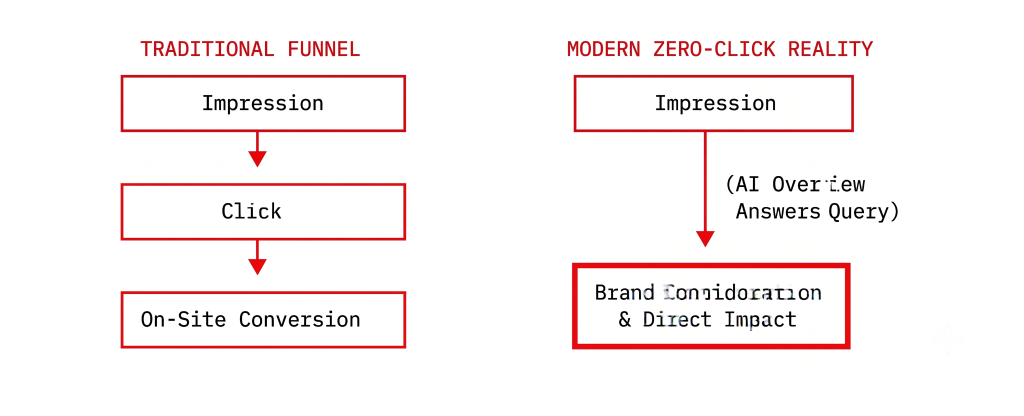
This structural shift requires a philosophical pivot. Marketers must accept that attribution and impact are no longer the same thing in PPC. If you only measure value through direct-click attribution, you risk turning off top-of-funnel campaigns that are establishing critical baseline awareness inside zero-click AI modules.
Furthermore, to maintain efficiency in a high-automation landscape, auditing for structural errors is vital. A study uncovering 11 PPC errors in recent B2B audits highlights how legacy campaign settings bleed cash. Media buyers must also be on high alert for dashboard discrepancies, such as the recently reported issues with Google’s Search Lost Impression Share reporting, which can lead to misguided bid adjustments if accepted at face value.
3. The New AI Battleground: Conversational Search & Social Commerce
The advertising map is expanding rapidly as alternative environments challenge Google’s dominance.
OpenAI Ads Manager (Beta): The tech world is watching closely as OpenAI builds out its monetization architecture. The company has officially launched product feed ads in its Ads Manager beta and has expanded ChatGPT Ads Manager beta access to UK advertisers. Conversational AI placement is moving from a theoretical future to a live Q2/Q3 2026 performance channel.
Microsoft’s Precision Targeting: Microsoft continues to leverage its unique data partnerships. The platform has released Product Explorer for catalog insights and significantly upgraded its LinkedIn connection, expanding LinkedIn targeting with job seniority filters and executing further enhancements to job seniority targeting parameters.
Meta & Social Commerce: Meta is focusing heavily on reducing checkout friction, expanding live shopping ads and virtual card checkouts to capture direct transactional volume in-app.
4. UI Quality Controls, Placements, and Analytics Hygiene
The ecosystem’s evolution is accompanied by tactical placement shifts and hygiene requirements designed to combat ad fatigue and maintain user trust.
Placement Shakeups: Google has started migrating Gmail Ads to the bottom of the Promotions and Social tabs, forcing advertisers to optimize for top-of-tab visibility or rethink desktop Gmail as a high-intent placement.
Creative Enhancements: To boost engagement, Google added automated Voiceover Video Enhancements, launched a Leads Section directly for Lead Forms live in-UI, and introduced the highly anticipated multiple image assets running alongside sitelinks.
Ad Safety and Disclaimers: Reflecting tighter regulatory landscapes, a new Text Disclaimer Asset has arrived in Google Ads. This sits alongside Google’s expansion of its limited ad serving policy on Search to prevent unverified brands from launching high-volume campaigns instantly.
Analytics & Verification: Technical setups are getting cleaner. Google Analytics has rolled out critical updates, adding source grouping and hostname filtering in GA4 to keep spam and development environments from muddying performance data.
Key Takeaways for Advertisers
Re-architect Performance Max Goals: Ensure your campaigns are not cannibalizing brand equity. Utilize the newest features to make Performance Max focus strictly on net new customers.
Audit Data Plumbing Immediately: With GA4’s new hostname filtering and Google’s automatic customer list matching, your first-party data connections must be flawless. Ensure you have activated the Shop Diagnostics tab in the Conversions section to catch feed and transaction errors early.
Prepare for Conversational Inventory: OpenAI’s product feed expansion is real. Build out feed structures that can adapt to conversational, query-less retrieval styles.
Embrace Post-Click Reality: As open-web traffic percentages drop, restructure your performance reports to measure holistic business impact, using incremental lift studies rather than over-relying on single-click attribution touchpoints.
Disclaimer: This blog post and accompanying podcast have been fully produced with Gemini AI, and reviewed by a human being, following weekly news-digest meetings at SeekandHit.
For more information contact [email protected].