

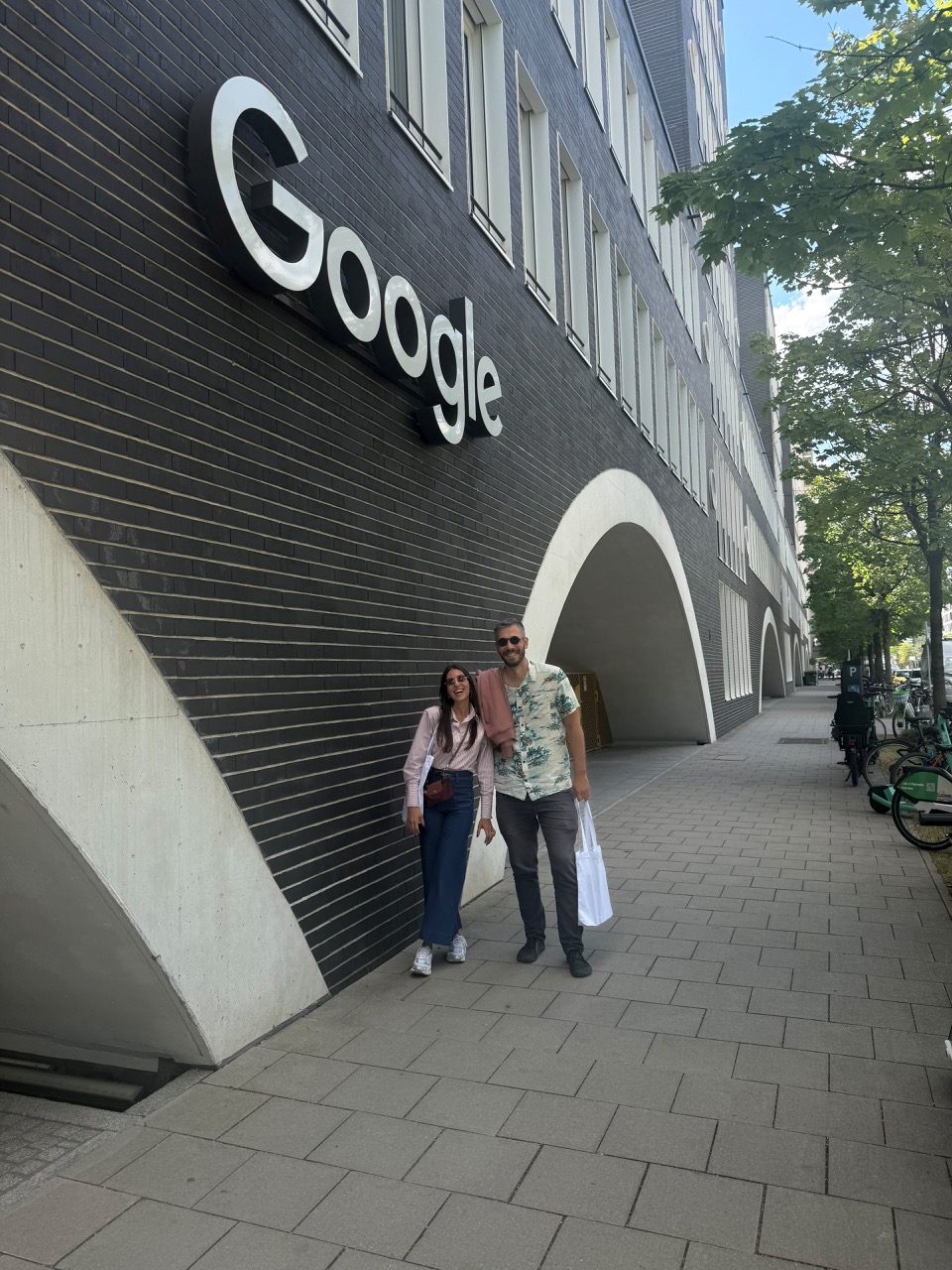
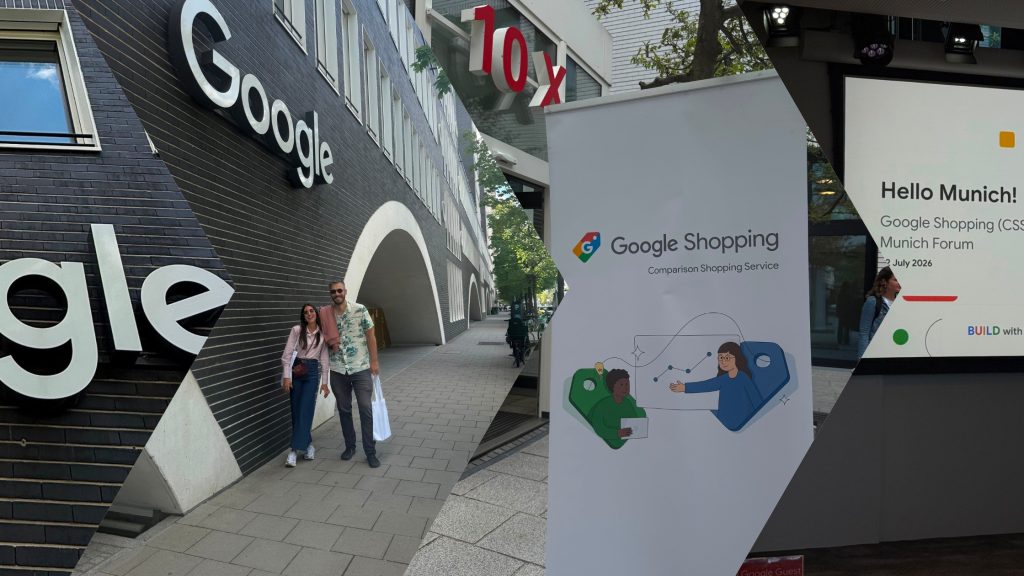
By the beginning of this month, our colleagues from the performance marketing department attended Google’s Munich Shopping conference at the Google CSS Forum.
If this year your job is all about managing shopping campaigns, here are our top 5 takeouts from Google’s conference and what we’re doing on our end at SeekandHit to adapt.
1. Agentic Commerce & Universal Commerce Protocol (UCP)
As you may have heard, fully agentic commerce is already being tested in the USA.
By chatting with Gemini, it allows a shopper to find a product and check out without ever touching the website. Not only are they able to make purchase considerations in a chat, but they can fully close the transaction by letting an agent do it for them (thanks to the UCP protocol).
According to Google, so far only 24% of people are willing to have an agent closing the purchase. Still, it drastically reduces the time-to-buy, since customers get served a-la-carte solutions, or are being sent to checkout urls with their personal information pre-filled.
In other words, we are no longer marketing human customers only, but a machine too.
What do you need to do? Audit your Merchant Center technical setup now. Double check your dynamic inventory, enable direct checkout URL, check the new Q&A and related product fields in the feed.
2. The messy middle is getting shorter
The lengthy exploration and evaluation parts of the purchase process are shortening drastically. A purchase decision that used to take months is now shortened to a span of an afternoon, all thanks to AI.
Google’s data shows that 75% of shoppers agree they can make more confident purchasing decisions specifically because of AI Overviews and AI Mode. Indeed, in this over-informed era, providing comprehensive product data is essential to simplify the purchase process and guide consumers effectively.
To Do: Make sure you are providing all the necessary information on each product. In the Q&A field in the Feed you can answer the most important insecurities in a talkative manner. Also, inspect your attribution paths periodically – we expect to see a lot more ai_assistant touchpoints in the customer journeys.
3. It’s a Brand-first world
According to Google, consumers are willing to spend 7x more for brands they love.
While agentic and machines can serve up the specs and prices, your brand is still the main character. It’s the only vibe check that really removes the doubt and gets the purchase.
Brands need authentic, relatable voices, video, and real consumer testimonials to build deep identity alignment. If there is a defined brand, it was never easier to build creatives. Start using these capabilities, there is a first-to-market potential.
To Do: Check out the FeedGen, start rotating your visuals, create videos for your products.
4. Feed improvement: from Hygiene to Optimisation and Growth
Google gave us a simple but beautiful way of thinking about the feeds. They talked about upgrading your feed from its starting point: from technical correctness to feed hygiene, optimisation and growth. But what does this entail?
You upload your first feed, start a couple of shopping or PMAX campaigns and they start bringing in the revenue. It is a technically correct feed and it functions, but you can do so much by doing the minimum. That is where hygiene comes into play.
For example titles not shorter than 90 characters, descriptions not below 500 words, Global trader item number (GTIN), ID, stock keeping unit (SKU), manufacturer part number (MPN) added etc. That is feed hygiene, it is a bit above technical correctness, low effort with a huge payoff.
To Do: Check if you are uploading all the optional fields in the merchant center and check the main fields: are you giving them the necessary minimum (slightly above technical requirements)?
Feed optimization goes a bit further. Are you testing those listings, titles, descriptions and rotating your creatives? How are you measuring the impact? Do you have all the necessary elements in the merchant center like product ratings and customer reviews added?
To Do: Devise a process that continually improves your feed. Check FeedX and FeedGen open source products. How are you structuring your products? Are you using custom labels?
Feed growth as the ultimate goal, entails a step further. It looks at your business goals and tries to optimize accordingly through the feed and shopping campaign logic and structure.
To Do – Consider this:
Are you pushing products that are basket generators?
Which products are pulling new customers?
Are you omnichannel – if so – is this accounted for by your shopping campaigns?
Are local inventory ads active?
Do you push inventory clearance through shopping?
These are just some of the considerations to take into account. If you want to know more or need a campaign check, get in touch with us.
5. AI Max for Shopping & Direct Offers
In relation to all things AI, and the tendency of search queries that are getting longer and longer, Google is rolling out campaign features tailored specifically for conversational queries.
AI Max for Shopping: Uses Gemini on the fly to rewrite ad copy, match landing pages dynamically, and pick the best creative format based on how complex the user’s prompt was.
Dynamic Summaries & Direct Offers: Ads in conversational search will now include small AI-generated “why this fits your search” snippets. You’ll also be able to trigger specific discount codes or bundles directly inside the chat response when purchase intent is super high.
The future of e-commerce is clearly shifting toward agentic and conversational experiences, but your brand’s unique identity remains the ultimate anchor in this AI-driven landscape. If you’re ready to master these new shopping fundamentals and future-proof your strategy, let’s navigate this evolution together—get in touch with us at SeekandHit to see how we can optimize your performance today.